
Welcome to our
Inclusive Systems Hub

Inclusion by design, not by chance

Policy is most powerful when it’s grounded in lived experience. This hub brings together resources that help leaders and decision makers translate inclusion into measurable, sustainable change. Whether you’re designing frameworks, funding models, or community programs, these tools can help you shape systems that work for everyone.

Access these evidence informed resources
to strengthen your policies and bring inclusion
to life at scale.

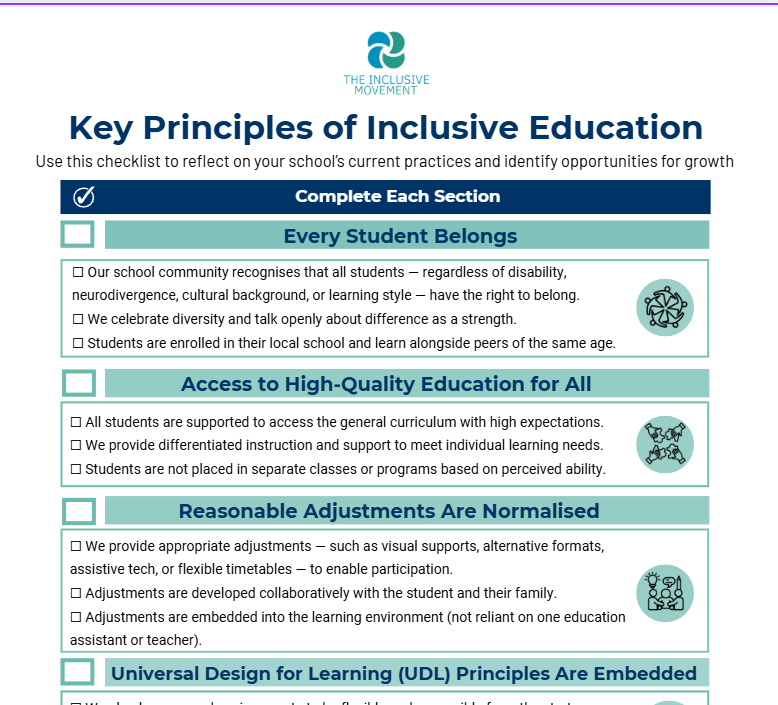
  • Checklist for inclusive education principles: Every student belongs, access to high-quality education for all, reasonable adjustments are normalized, universal design for learning principles embedded.

    Key Principles of Inclusive Education

    Understand the foundational elements of equitable learning systems.

    Download

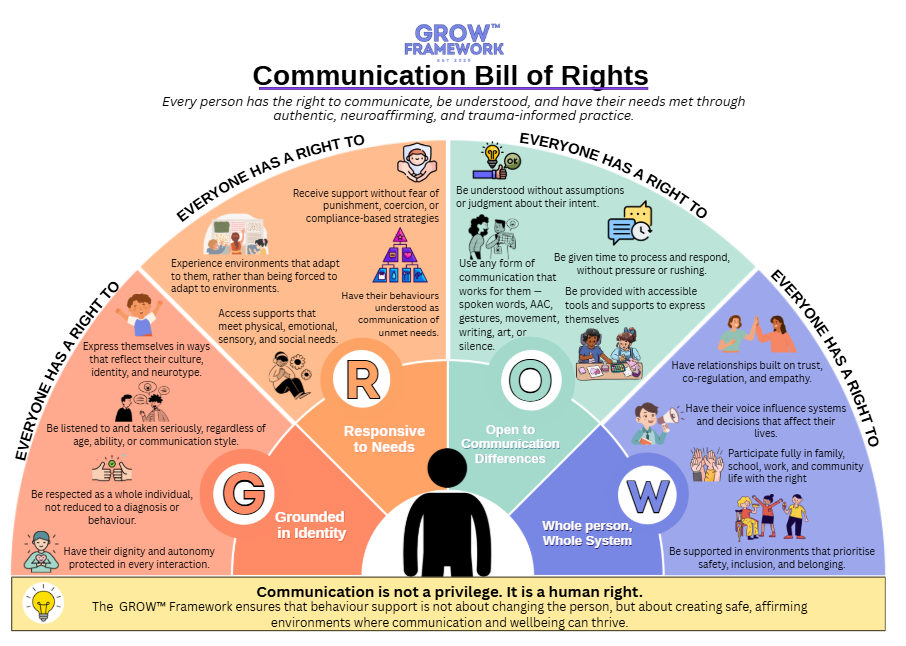
  • This image is a Communication Bill of Rights chart from the GROW Framework. It emphasizes that every person has the right to communicate, be understood, and have their needs met through authentic, neuroaffirming, and trauma-informed practices. The chart highlights four key principles: Everyone has a right to express themselves in ways that reflect their culture and identity, to have their behaviors understood as communication of unmet needs, to be listened to and taken seriously regardless of age or ability, and to be respected as a whole individual with dignity and autonomy. It also stresses that communication is a human right, not a privilege, and fosters a safe environment for communication and well-being.

    Grow: Communication Bill of Rights Poster

    A framework that reinforces dignity, choice, and participation.

    Download

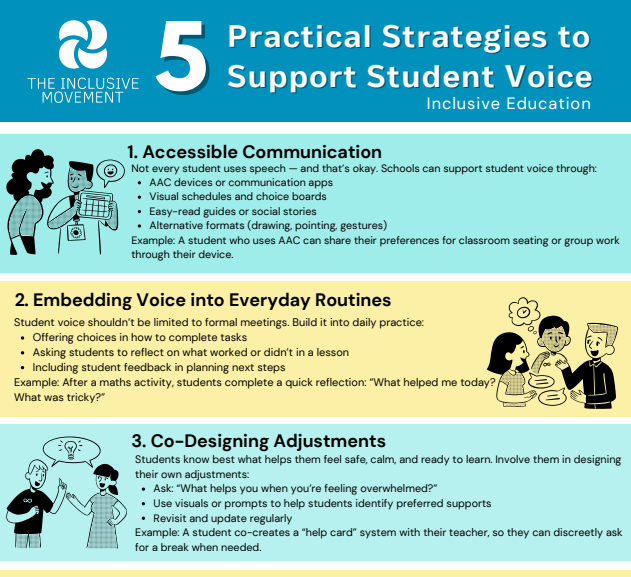
  • Poster titled '5 Practical Strategies to Support Student Voice' by The Inclusive Movement, listing strategies: 1. Accessible Communication, 2. Embedding Voice into Everyday Routines, 3. Co-Designing Adjustments, with detailed tips and examples for each.

    Practical Strategies to Support Student Voice

    Tools for embedding participation and agency into policy.

    Download

  • Cover of a publication titled 'Disability Terminology and Inclusive Language,' featuring an illustration of colorful paper cutouts of human figures holding hands.

    Disability Terminology & Inclusive Language

    Ensure your language reflects respect and best practice.

    View Here

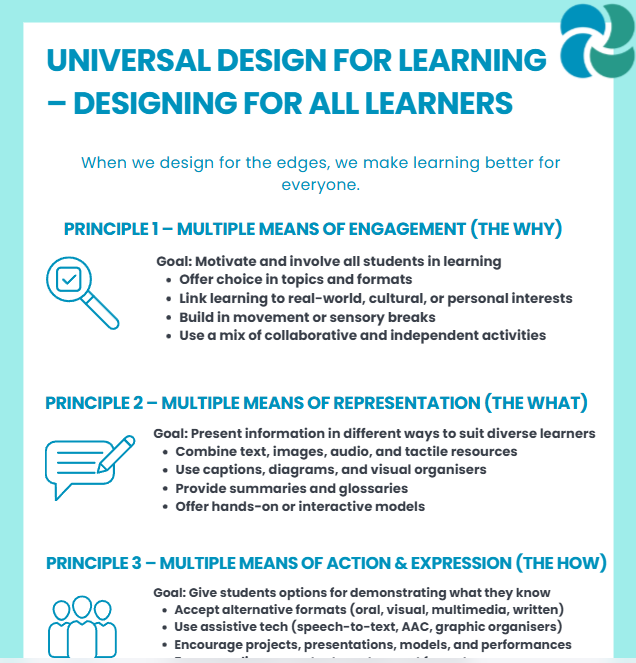
  • A presentation slide titled 'Universal Design for Learning - Designing for All Learners' explaining principles for making learning accessible, including multiple means of engagement, representation, and action & expression.

    Universal Design for Learning (Quick Reference Sheet)

    Framework for embedding inclusion in program design.

    Download

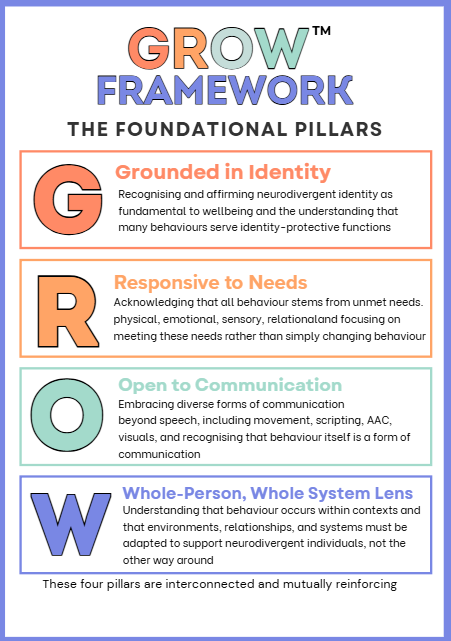
  • Graphic detailing the GROW Framework's foundational pillars: Grounded in Identity, Responsive to Needs, Open to Communication, and Whole-Person, Whole System Lens.

    The Foundational Pillars: GROW Framework

    High level model for supporting family-centred and neuro-affirming systems.

    Download